Think · Surfski · Out of production
Think Nitro
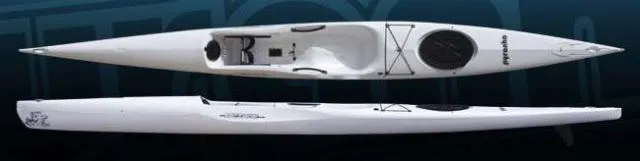
Rotomoulded PE hull, narrow-ish beam for a plastic ski, with lateral chines running nearly full length, a slight V-bow, gently rounded flat mid-section and increasing rocker toward the stern for surf catching. High-volume bow, high-sided self-bailing cockpit.
- Length
- 5.39 m
- Beam
- 53 cm
- Deck
- 33.5 cm
- Lightest
- 23.5 kg
Specifications
- Length
- 5.39 m
- Beam
- 53 cm
- Deck height
- 33.5 cm (est.)
- Category
- Surfski
- Usually paddled by
- New paddlers
- New price
- US$1,495
Layup weights
On-water profile
Modelled from published beam, length and deck height. Low confidence. Speed is our rating. Both are given at the hull's own design weight.
Stability here means how steady the ski feels sitting still on flat water. Where two craft have overlapping ranges, we can't say which is more stable. Downwind handling is a separate thing, covered in the evidence note below.
Evidence note
Suits: Flat water, learning surf, moderate chop and downwind for less experienced paddlers; PE tolerates rock/reef launches the composite skis can't.
Paddler weight
The estimated sweet spot is 70–81 kg, with a broader estimated guide of 57–84 kg. This estimate is a guide, not a limit. Seat fit, conditions and paddling style matter. Lighter paddlers can still enjoy a larger hull, especially downwind. A test paddle is the best check.
Estimated from hull dimensions using a formula fitted to makers’ own paddler limits. It does not establish the designer’s intended paddler weight. How this is worked out.
Generations
Co-developed with UK's Pyranha Kayaks and rotomoulded there; sold as both 'Pyranha Octane' and 'Think Nitro' (same boat). A rotomoulded (PE) answer to the Epic V7, NOT a composite race ski.
Pros and cons
Pros
- Durable PE construction, tolerant of beach/rock launches
- Near composite-race-ski speed for a plastic boat
- Much cheaper entry point than composite Think skis
- Good primary/secondary stability for learning
Cons
- Heavy (~23-24kg vs 10.5-15.5kg for composite)
- Discontinued and hard to find; no current AUD stock
- Awkward carry handles
- Limited storage
What paddlers say
seakayakphoto.com: on flat water 'proved remarkably stable while moving', hitting 97.6% of a friend's Epic V8 Pro's top speed.Reported experience
seakayakphoto.com: 'challenging in steep surf zones compared to shorter decked kayaks'; remounting needs practice.Reported experience
Gallery
Where to buy
The Nitro is out of production. You can only buy it second-hand.
Dealers:
2016-era Pyranha Octane US price (US$1,495); UK GBP1,095-1,150. No current AUD dealer listing found: discontinued/unavailable in Australia.