Think · Surfski · Out of production
Think Evo III
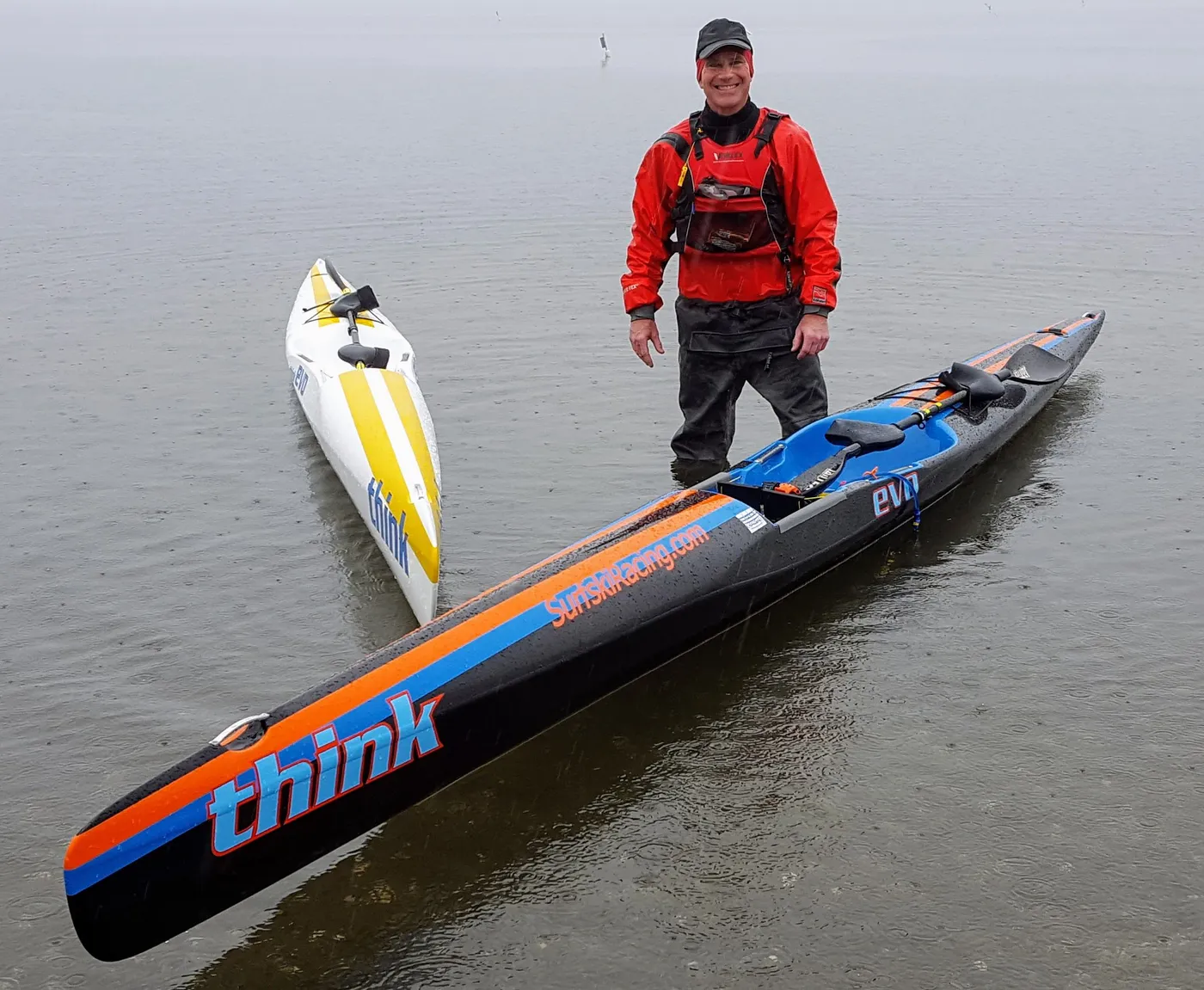
Flatter-bottomed hull than the Evo II through the midsection for a firmer, more locked-in feel, reverting to Evo II-style rocker toward the stern for run-catching. Narrow (47cm) beam at the catch keeps the stroke efficient; the carbon Ultimate layup is noticeably twitchier than the heavier layups.
- Length
- 6.25 m
- Beam
- 47 cm
- Deck
- 33.5 cm
- Lightest
- 10.4 kg
Specifications
- Length
- 6.25 m
- Beam
- 47 cm
- Deck height
- 33.5 cm (est.)
- Category
- Surfski
- Usually paddled by
- Paddlers in chop
- New price
- A$3,990
Layup weights
On-water profile
Modelled from published beam, length and deck height. Low confidence. Speed is our rating. Both are given at the hull's own design weight.
Stability here means how steady the ski feels sitting still on flat water. Where two craft have overlapping ranges, we can't say which is more stable. Downwind handling is a separate thing, covered in the evidence note below.
Evidence note
Suits: Best downwind where the firmer hull tracks and holds runs; needs more attention than the Six or Evo II in flat confused chop, especially in the lighter Ultimate layup.
Paddler weight
The estimated sweet spot is 84–97 kg, with a broader estimated guide of 68–101 kg. This estimate is a guide, not a limit. Seat fit, conditions and paddling style matter. Lighter paddlers can still enjoy a larger hull, especially downwind. A test paddle is the best check.
Estimated from hull dimensions using a formula fitted to makers’ own paddler limits. It does not establish the designer’s intended paddler weight. How this is worked out.
Generations
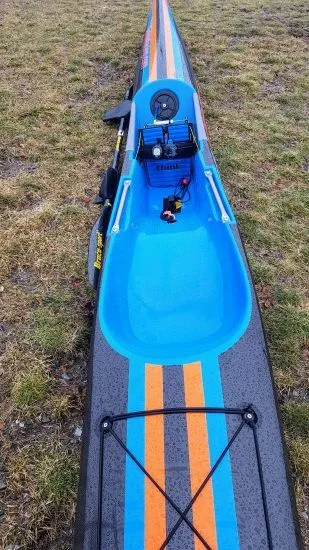
Marketed as 'Evo Gen 3'. Flatter hull than the Evo II from ~7ft9in back from the bow to just aft of the bailer, then reverts to Evo II-like shape toward the stern. Reworked bucket: raised thigh support, flared calf contact points, ergonomic contours, micro-adjustable foot track.
Pros and cons
Pros
- Faster than Evo II on the flat while keeping strong downwind manners
- Reworked bucket: raised thigh support, flared calf contacts, comfortable and secure
- Responsive sporty handling that rewards a developed paddler
- Micro-adjustable foot track, DeBrito bailer, integrated leash attachment
Cons
- Noticeably twitchier than Evo II and the Six, especially in the Ultimate layup
- Requires adaptation: not a true beginner boat despite the 'Evo' reputation
- Ultimate (lightest, fastest) layup sacrifices the most stability
What paddlers say
"The Evo 3 Ultimate, like all carbon skis, [is] less stable than their slightly heavier layups" such as the Elite (surfskiracing.org).Reported experience
Reviewer paddled 'even to 2-3 boat lengths behind' an Epic V10 3G-class paddler in mixed conditions, praising fit and downwind response (surfskiracing.org).Reported experience
Gallery
Where to buy
The Evo III is out of production. You can only buy it second-hand.
Dealers:
AUD (Expedition Kayaks), sold as 'Evo Gen 3': Performance 15kg $3,990, Elite 12.5kg $4,990, Ultimate (custom carbon) $6,300.
Sources
- https://surfskiracing.org/2018/03/think-evo-3-ultimate-surfski-review/
- https://expeditionkayaks.com/products/think-evo-ii
- https://surfski.info/forum/19-boats/19003-think-evo-3rd-generation.html
- https://thinkkayak.com
- https://thinkkayak.com/think-evo
- https://www.coastoutdoors.ca/evo-elite-gen-3.html
- https://www.coastoutdoors.ca/paddling/surfskis/think-surfskis/