Red7 · Surfski · Out of production
Red7 Surf70
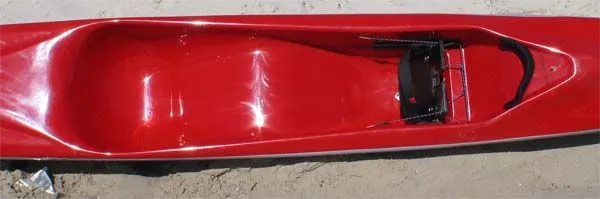
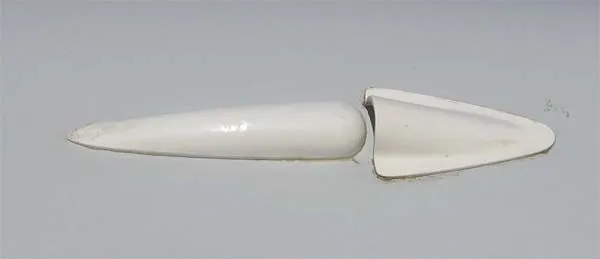
Flat-underhull design (flattest ahead of cockpit) giving very high stability but hull-slap upwind in chop; nose digs into oncoming waves at speed. Wide flat-water turning circle but easy to chase runs downwind. Early 'venturi bulb' drain, precursor to the bullet scupper.
- Length
- 6.6 m
- Beam
- 44 cm
- Deck
- 33.5 cm
- Lightest
- 13 kg

Specifications
- Length
- 6.6 m
- Beam
- 44 cm
- Deck height
- 33.5 cm (est.)
- Category
- Surfski
- Usually paddled by
- New paddlers
- New price
- Not listed new
Layup weights
On-water profile
Modelled from published beam, length and deck height. Low confidence. Speed is our rating. Both are given at the hull's own design weight.
Stability here means how steady the ski feels sitting still on flat water. Where two craft have overlapping ranges, we can't say which is more stable. Downwind handling is a separate thing, covered in the evidence note below.
Evidence note
Suits: Strong downwind (picks up runs easily, low wake hard to draft) and in rough chop where stability shines; less composed punching upwind into steep waves where the flat hull slaps and takes spray.
Paddler weight
The estimated sweet spot is 80–93 kg, with a broader estimated guide of 65–97 kg. This estimate is a guide, not a limit. Seat fit, conditions and paddling style matter. Lighter paddlers can still enjoy a larger hull, especially downwind. A test paddle is the best check.
Estimated from hull dimensions using a formula fitted to makers’ own paddler limits. It does not establish the designer’s intended paddler weight. How this is worked out.
Generations
First-gen of Red7's CAD-redesigned range, superseded within ~a year by the Surf70 Pro (a distinct later hull). Out of production/support since; occasional SA/AU/NZ used-market finds.
Pros and cons
Pros
- Very high stability, near dedicated beginner boats
- Solid, strong construction per original review
- Good downwind speed and easy run-chasing
- Innovative venturi 'bulb' drain improved low-speed draining
Cons
- Hull slaps and takes spray upwind
- Wide flat-water turning circle - weak for buoy racing
- Brand defunct - no parts/service/support
- Early demo units had rudder-post leaks and inconsistent finish
What paddlers say
Rob Mousley (surfski.info, 2006): 'extraordinary stability combined with speed... attractive to a wide range of ability', but criticized wide turning circle and flimsy demo footplate.Reported experience
'Craig M' (surfski.info, 2020): offered one at AU$450, decided worth it as a cheap learner/flat-water boat.Reported experience
'MCImes' (surfski.info, 2020): 'if it's that cheap, get it now... at worst sell for a profit.'Reported experience
Gallery

Where to buy
The Surf70 is out of production. You can only buy it second-hand.
Maker closed Red7 is no longer trading. Dormant since the factory fire around 2011-2012. Nothing has been built since and there is no manufacturer support.
Red7 is no longer made, so second-hand is the only option.
No manufacturer/dealer support; oldest, rarest Red7 still occasionally seen. Some demo units weighed up to 21kg - verify actual weight/condition.
Similar craft
Closest in stability, speed and paddler weight.
These prices haven't been checked for more than three months and may be out of date. Check with a dealer before relying on one.
Mazu (Elio) Pico
No list priceask a dealer


Stability: dimension estimate, low confidence
Fenn Mako XT
Out of production


Stability: dimension estimate, low confidence
Spirit PRS (Performance Racing Ski) / PRS 570
Out of production
Stability: dimension estimate, low confidence